I subscribe to many sites in my feed reader. Some sites tend to use descriptive headlines, which help me decide whether to open the feed item, swipe it away, or adjust my feed filters. One example of a descriptive headline came in the form of January 30, 2026 report by Alex Forbes-Calvin for Games Industry.biz (heretofore “GIb”) titled Google releases Project Genie AI tool for creating “playable worlds” that can feature copyrighted IPP. Before reading that headline, I did not think to myself, much less verbalize, that what the video game industry needs is AI slop worlds with potential copyright infringement as a bonus, but I opened the link anyway. While things are as bleak as I expected from the headline, I do promise to share some qualified good news after working through the article.
Assessing Project Genie’s Content Creation Promises
Let us jump right into the beginning of the GIb article:
Tech giant Google has started to open access to its latest AI tool, Project Genie, which allows users to create ‘playable worlds’.
This sounds great. Why go through the trouble of using your imagination, learning a craft, and building a video game world (or enjoying the product of real human beings who put the work in) when you can outsource the work to Google with a few prompts?1
In a video, Google’s DeepMind artificial intelligence research division shows that people can generate this content with just a prompt, similar to other generative AI tools.
For whatever it is worth, I do think that Project Genie sounds like a great tool for ill-defined “content” generation. It should be able to produce plenty of content. What is the content of content? To paraphrase James Carville: It’s the content, stupid.
GIb turned its attention to copyright infringement:
[U]sers are already taking to social media to showcase content apparently generated by the technology using copyrighted characters and IP, such as Shadow the Hedgehog and The Legend of Zelda: Breath of the Wild.
I like the word choices in this paragraph, albeit almost certainly not for the reasons the author intended. Start with the users. Users of social media, heretofore people who spend tremendous amounts of time on social media and have the ability to swipe without thinking in a way that gives bystanders the creeps, are a good target audience for Project Genie. They can now, without too much effort, create “game world” content. While I appreciate the focus on copyrighted characters and am not opposed to the concept of copyright (see our site footer), the users are not creating content to compete with Sega and Nintendo. The users are creating content for social media impressions. Sonic, Mario, Zelda, Crash Bandicoot, Bonk, or Alex Kidd are simply means to an end.2 (Fortunately for the content creators and consumers, content for content’s sake is never-ending, unlike engrossing games for human beings, which do tend to end — as in they reach a conclusion or do not use algorithms and tricks to try to prevent players from going outside).3
The article quotes a video game lawyer named Pete Lewin on the subject of the potential copyright issues inherent in Project Genie’s design. His analysis seems over the target to me, and I do not find it in any way disagreeable. But my focus here is less on the intricacies of copyright law and more on the Project Genie users creating “content” for the content consumers. To that effect, I quote the following from Mr. Lewin:
Allowing fans to recreate their favourite game characters in static images and memes is one thing. Allowing them to create entire game worlds which could one day begin cannibalising their own official products is another.
While I agree that there is a distinction between creating “static images and memes” of Sonic and asking “Project Genie” to recreate Green Hill Zone but with the Toads from Mario having been turned into robots by Dr. Robotnik (I am available if Nintendo and Sega are interested), the underlying subjective motivation of the “fans” is most likely the same in most cases: Content.4 Very little user-generated content for other users truly aspires to challenge the best Sonic games. I doubt that the first instinct of the “users” in 2026 will be to ask Project Genie to re-create Sonic Adventure but focus just on the Sonic and Tails stages and make the camera less erinacidal.5 This is not to say that if and when Google Genie improves to the point where it can be coaxed into creating largely functional game worlds with copyrighted elements, the problems suggested by Mr. Lewin are not real. Similarly, this sort of AI output may find traction to the extent that some players in the game industry treat their customers like users, thus dulling the senses and blurring the line between meaningful games and AI slop. But I strongly suspect that your average Project Genie “user” is probably more interested in social media impressions than beating Nintendo at its own games (many of these people probably lack the attention span to play through the games they want Project Genie to imitate).
But what if I told you that there is some good news?
The Better Project Genie Gets, the Less Likely You Will Be Able to Play AAA Project Genie Games
The AI boom has been great for people who thought to themselves that computer RAM was just a little bit too cheap. As The Register recently reported thanks to pressure from the AI giants. These RAM prices will cause other spikes, meaning fans of more expensive solid state drives and video cards will be able to rejoice. Video game aficionados who believe that absence makes the heart grow fonder were likely fond of the news that Valve delayed its upcoming Steam Machine (I was not planning to get one but I love the form-factor) due to – wait for it – RAM shortages. In case anyone is wondering, I replaced the RAM in several old laptops and ordered a new (yet-to-be installed) solid state drive for my workstation PC before the price increases started to bite (I may need my workstation to be good until 2035 or so).6
From this we find some good news for Project Genie. To be sure, Project Genie and similar projects may be used to pump out copious slop. But if Google and its rivals continue consuming RAM like TikTok addicts consume 10-second dance videos, we will be lucky to have machines that can run any games, much less the “AAA” masterpieces requiring the newest Nvidia video cards that you will not be able to buy since they will be powering the AI tools being used to make the slop games.7
(Lest anyone takes this too seriously, I submit for the record that I am a fan of older computers, sometimes two-decade old computers, and most of the AI slop games will probably run imperfectly fine on a potato, much less your current computer that you will need to keep working for the next decade.)
A Serious Note on the AI-Driven Shortages and Games
GIb concluded with an inspiring quote from our Googlean overlords:
We look forward to seeing the infinitely diverse worlds they create, and in time, our goal is to make these experiences and technology accessible to more users.
Google tried its hand at game streaming with Stadia. That did not go well. Unable to take over game streaming, Google unleashes its game world-building AI, promising to make the social media landscape a better place.
(In a positive, Google did team up with Nintendo to make a fun Google Search-based Pokémon catching game last year, which I enjoyed. I also became more fond of it over time because my article on the game has turned out to be popular in Google Search.)
But let us focus on “make these experiences and technology accessible to more users.” While I would classify myself as “skeptical” regarding Project Genie and similar endeavors, there is good in the idea expressed if we were to apply that idea to something (or some things) other than Project Genie. There are many free and open source tools and frameworks for making games (and by extension, game worlds), and even some proprietary solutions with permissive-enough licensing. Combined with similarly situated solutions for graphic and music design, I suspect, although I am not expert enough to say conclusively, that there are more tools and guides out there for genuinely indie game development than at any point previously. That is, these tools and frameworks make designing games, or at least understanding how a game may be designed, accessible to more designers and people who appreciate games.
I can speak as an expert in one sense: I was able to produce a working visual novel in just under two weeks using Ren’Py, which you can read about and play (note “less than two weeks” is the time from when I created the project in Ren’Py to when I published the piece). I am no programmer, but I read the docs and worked with my good friend Victor V. Gurbo, who supplied music, photographs and edited images, and story ideas, to put it together.

Ren’Py is just one such tool for one kind of game/story.
Google’s vision, which I suspect comes from a need to find every possible use-case for AI, is something different. Instead of encouraging people to use and support various projects which make game development accessible, it promises a chatbot. Focus on the shiny object instead of encouraging people, small teams, and upstart companies to make something new and humane instead of derivative and sterile.
Concluding With a Note on Humane Games
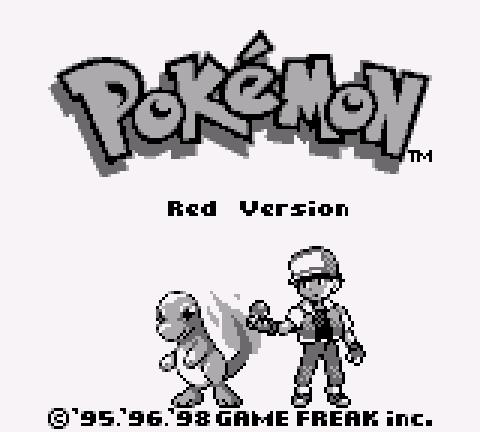
I have not written as much about humane (as in by humans, for humans) game design as I have about writing and reading online. But the Project Genie hubbub and other AI “game” nonsense reminded me of two articles I wrote. First, in Imagination in Pokémon Red and Blue, I offered my take as someone who played Pokémon Red in 1998-99 in the peak of Pokémania on what made the original Pokémon games, flawed as they were and are, remarkable pieces of game design – specifically how they inspired young players to imagine themselves going on an adventure in a lively world in part because of their minimal (even by late 90s standards) presentation, an experience which I opined is difficult to recapture today.
Similarly, in Engrossing but not Excessively Addictive, I praised a 2004 review’s praise of the excellent Harvest Moon: A Wonderful Life, a wholesome, family-centric classic which by design encouraged healthy engagement with players.8
Neither of these games were particularly technically impressive when they were released, much less in 2026. But they were great because they were humane, created by human with a clear and distinct vision not only for what the games themselves should be, but also how players may engage with the games.9 While free-to-start smart phone games, micro-transaction-laden console and PC games, AAA disappointments, more and more subscriptions, and now AI world-generation may dominate the gaming headlines, there are many human beings (including at some full-fledged game studios and big companies, lest anyone mistake this article as some kind of “indie” or “anti-corporate” manifesto, which it most certainly is not10) working to make real games for real people. Moreover, for people with a vision, making something imbued with the spirit of a Pokémon Red and Blue or Harvest Moon: A Wonderful Life is considerably easier in 2026 than 1996 or 2003 (provided that you have the “vision” and grasp the “spirit” of course).
Footnotes
1 In the context of “creating” with AI, I acknowledge that there are high effort ways of “working with” the AI to produce a world, piece of writing, or game. While I would not advocate for so-called AI art creation, I submit for the record that I understand the technical distinction between someone who, say, spends hours refining prompts to generate a world and then goes beyond the AI, and someone who spends 10 minutes generating unrepentant slop for a TikTok video, as well as why intellectual property owners are almost certainly more concerned with the former.
2 How many readers will get the Bonk and Alex Kidd references?
3 I amended my original version of this section to account for games like Tetris. With that being said, I am sure there are some micro-transaction laden Tetris clones out there.
4 I submit for the record that I respect the real meme lords out there.
5 Nothing like jumping onto a small platform you have to fight the camera to see.
6 I had to move up a server tier along with implementing other fixes to (I hope) fix this site’s recent crashing problems. What caused my problems beginning in 2024 or so? We can only guess.
7 I was going to use this joke in a recent issue of The Newsletter Leaf Journal but then I decided that I had an article here.
8 Story of Seasons: A Wonderful Life, which was released in 2023 for PC (Steam), Switch, PlayStation 5, and Xbox X/S, is a re-make of Harvest Moon: A Wondeful Life. I have only played the original, however.
9 For a good visual novel example, see my review of Collage, which was created with the free and open source KiriKiri2/KAG3 visual novel framework.
10 Being “indie” does not presumptively make something good, humane (see “for humans”) or otherwise worthwhile. This is just as true for websites as for games (i.e., if you are a regular reader here, I assume that the main reason you are is because you enjoy my writing and how I present it, not because this could be described as an “indie” website). Similarly, being made by a corporation or game studio does not make something presumptively inhumane or not worthwhile, granting some of the subpar trends I noted above.
